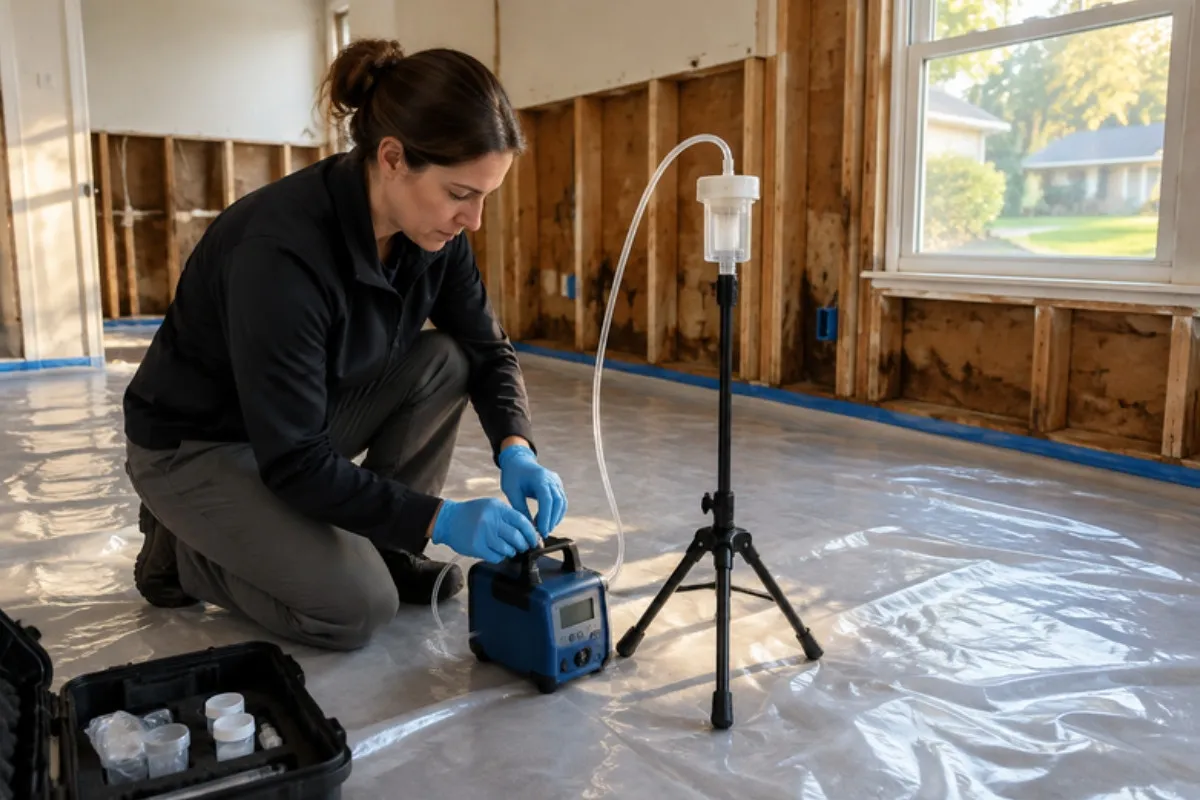
Clearance testing in Lawrenceville is the final check after mold removal: a visual review, moisture readings and usually air and surface samples compared with outdoor air, all taken before containment comes down. It tells you whether the cleanup met the terms you agreed to, rather than relying on the remover's word. Call the number on this page to be connected with a local mold inspector in Lawrenceville.
Why the last step matters in Lawrenceville
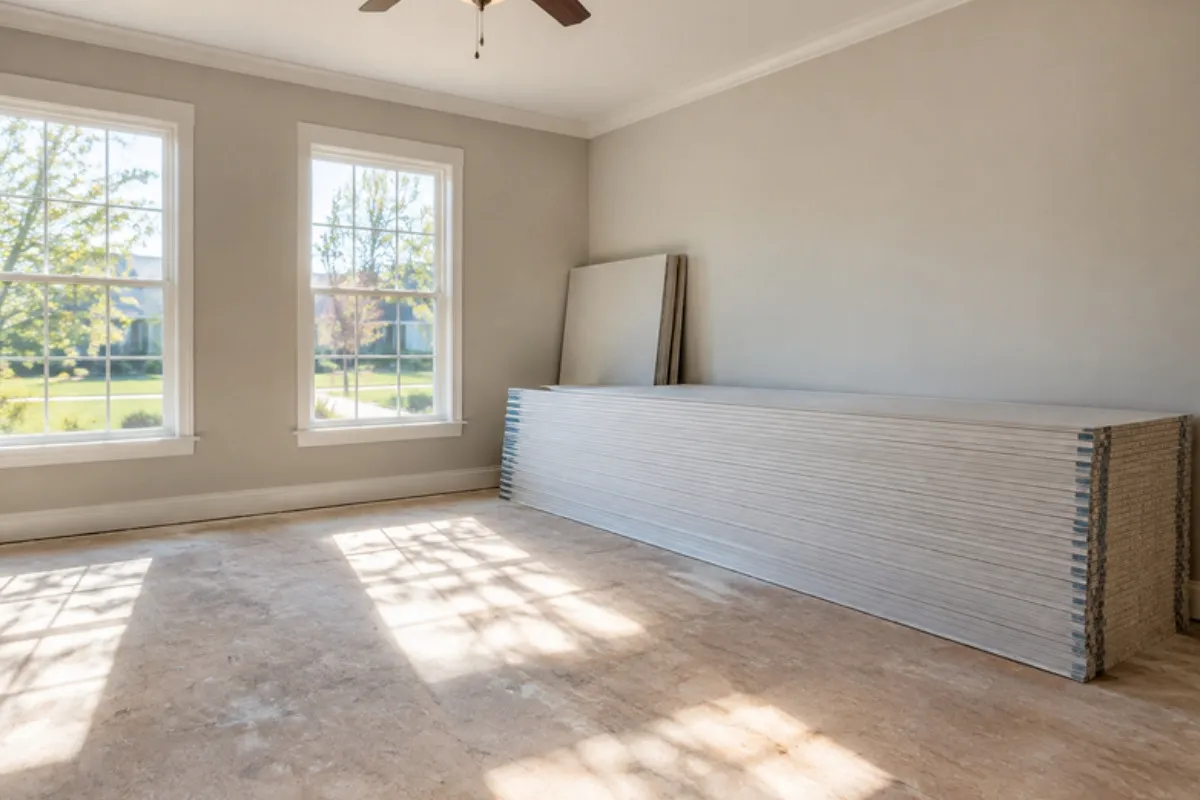
Lawrenceville, the Gwinnett County seat about 27 miles northeast of Atlanta, sits largely in the Yellow River watershed. Gwinnett County Stormwater Management reported that the heaviest rain of the September 2009 floods fell near Lawrenceville, with roughly 19 inches over eight days in parts of that watershed, and National Weather Service gauges on Pew Creek, Shoal Creek and the Alcovy River crested above flood stage on September 21, 2009. Homes that took on water then, or from a burst supply line or roof leak since, often end up with remediation in a crawl space, a finished lower level or a wall cavity. Those are exactly the spots that disappear behind new drywall, so the check has to happen while they are still open.
Remover's walk-through vs independent clearance
| Question | Remover's own walk-through | Independent clearance test |
|---|---|---|
| Who judges the work? | The company that did it | A tester with no stake in the result |
| Is anything measured? | Often just a visual look | Moisture readings plus lab samples |
| Is there a baseline? | Rarely | An outdoor air sample for comparison |
| What do you keep? | An invoice | A dated report tied to written pass criteria |
Georgia does not require the remover and the tester to be different companies, but Angi recommends separating them. EPA notes that surface sampling can help show whether an area was adequately cleaned, and no federal limits exist for spore counts, so the pass terms belong in writing before work starts.
Signs your cleanup needs a second look
- The crew wants to pull the plastic sheeting the same day they finish.
- Framing or subfloor still feels cool and damp to the touch.
- The leak that caused the growth has not been repaired.
- A musty smell lingers outside the area that was treated.
Timing through a Gwinnett year
Drying takes longest in the humid months, when dehumidifiers may need to run several days before readings settle, so build that time into the schedule rather than rushing the sample date. Once the area passes, rebuilding with new drywall or framing goes through the City of Lawrenceville Planning and Development permitting office. Renters whose landlord is handling the work can ask in writing for a copy of the clearance report; the city's Code Enforcement covers property maintenance, and Lawrenceville has a Multi-Family Rental Housing Ordinance.
Post-Remediation Clearance Testing questions in Lawrenceville
When should the clearance test happen?
After flood damage, what else should clearance check?
Can the company that removed the mold also do the clearance test?
I rent. Can I ask for clearance testing after the landlord's mold work?
More mold services in Lawrenceville
Post-Remediation Clearance Testing nearby
Helpful guides
Sources
- Wikipedia: Lawrenceville, Georgia
- Gwinnett County Stormwater Management: September 2009 flood report (pdf)
- National Weather Service Atlanta: The Epic Floods of September 2009
- EPA: Mold Information Slideshow (testing and sampling)
- Angi: How to Hire a Mold Remediation Company
- City of Lawrenceville: Plan Review and Permitting
- City of Lawrenceville: Code Enforcement
- O.C.G.A. 44-7-13: Landlord's duties as to repairs (Justia)
Last updated: