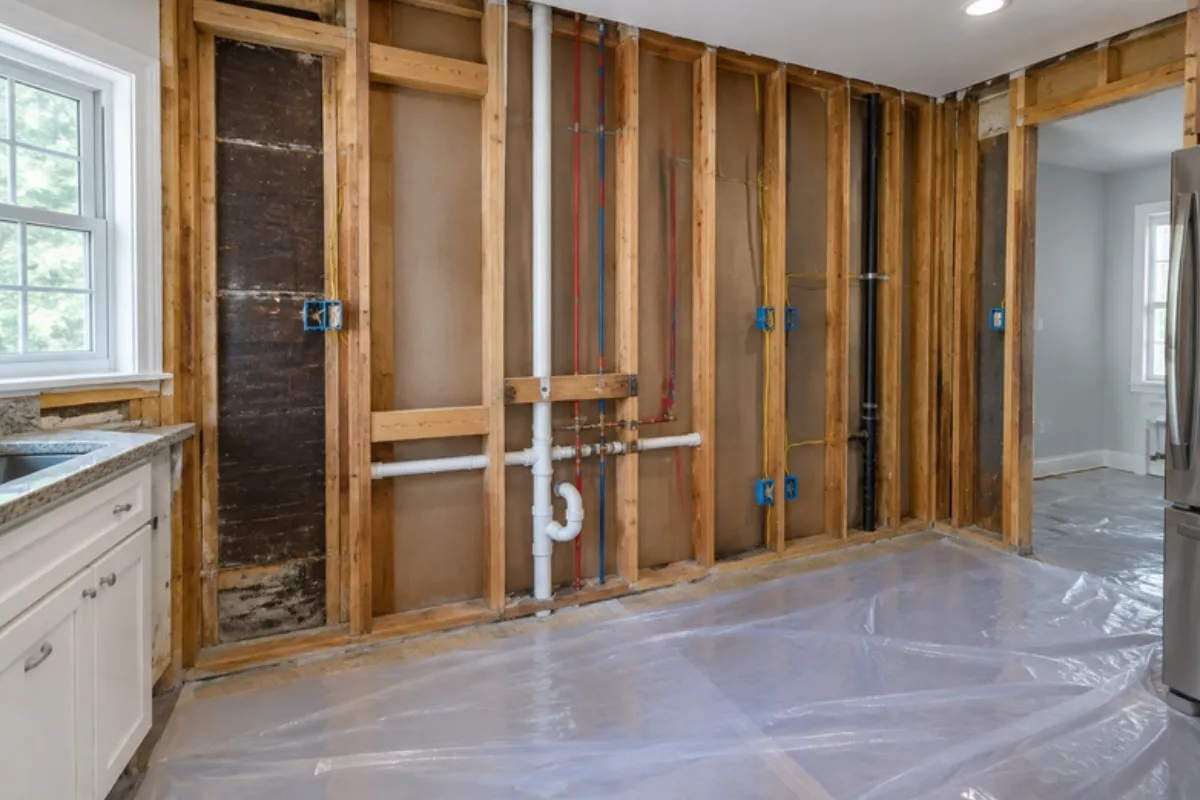
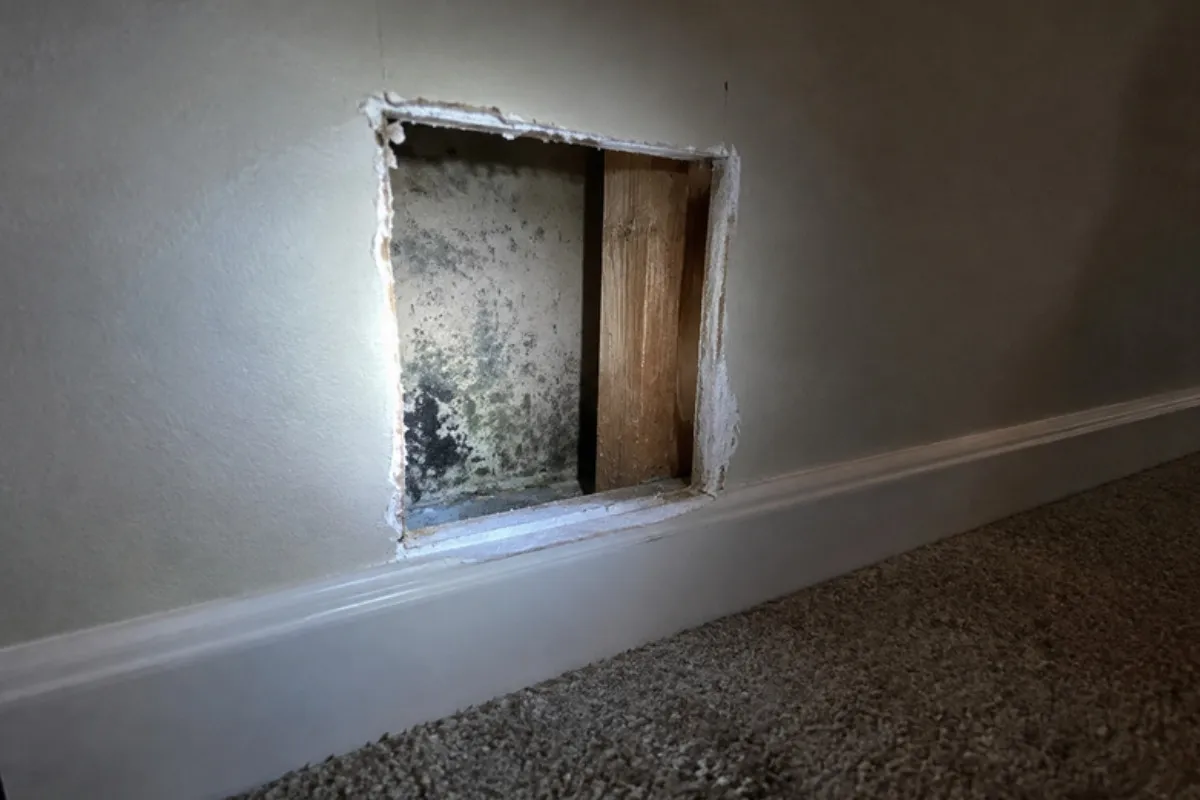
Mold in a Lawrenceville wall usually means water has been getting behind the drywall from a leak, a window or wet soil against the foundation. Fixing it takes three things: stop the water, remove the damaged board and insulation, and dry and clean the framing before anything new goes up. Call the number on this page to be connected with a local mold remediation company in Lawrenceville.
What pushes water into Lawrenceville walls
Lawrenceville, the Gwinnett County seat about 27 miles from Atlanta, sits in the Yellow River watershed. Gwinnett County stormwater staff reported that the heaviest rain of the September 2009 floods fell near Lawrenceville, with roughly 19 inches over eight days in parts of the watershed, and NWS gauges on Pew Creek, Shoal Creek and the Alcovy River went above flood stage on September 21 of that year. Walls that took water then and were closed up before they dried can still hide old growth.
Most wall mold here has a plainer cause: a slow drip at a supply line, a shower valve, or an ice maker line that runs behind a kitchen wall. Summer thunderstorms also find gaps around window trim, and lower-level rooms built against damp red clay pick up moisture through the foundation.
Surface cleaning or cutting the wall open?
| What you find | What usually fits |
|---|---|
| Speckled spots on painted drywall in a steamy bathroom, wall feels firm and dry | Surface cleaning, a better exhaust fan, and watching it |
| Stain that grows, paint that blisters, a meter reading that stays high | Open the wall, find the leak, remove wet board and insulation |
| Growth across more than about 10 square feet | A professional job with containment, as EPA suggests for larger areas |
| Walls that sat in floodwater | Cut out the wet section, dry the framing fully, then rebuild |
Early warning signs
- A tide-line stain under a window or along the baseboard
- Paint that peels in sheets or wallpaper seams that lift
- A musty closet on an outside wall
- Baseboards that swell or pull away from the wall
- A spot that comes back a few weeks after you scrub it
Timing and permits
Late summer, when the air is most humid, is when wall stains and odors usually show up, and a moisture meter gives the clearest picture then. Do not wait for cooler weather if a pipe is leaking; EPA says wet materials need to dry within 24 to 48 hours to head off mold. When the drywall goes back up, rebuild work inside city limits runs through Lawrenceville Planning & Development, which takes applications through its online Licensing, Permits, and Plans portal. Ask the contractor whether your job needs one.
Mold in Walls & Drywall questions in Lawrenceville
Water got into my walls during a flood or storm. What now?
How can I tell if mold is inside the wall and not just on the surface?
Do I need a permit to rebuild the wall afterward?
I rent. What can I do about mold in my walls?
More mold services in Lawrenceville
Mold in Walls & Drywall nearby
Sources
- EPA: Mold Cleanup in Your Home
- EPA: A Brief Guide to Mold, Moisture and Your Home
- EPA: Homeowner's and Renter's Guide to Mold Cleanup After Disasters (pdf)
- National Weather Service Atlanta: The Epic Floods of September 2009
- Gwinnett County Stormwater: September 2009 flood report (pdf)
- City of Lawrenceville: Plan Review & Permitting
- City of Lawrenceville: Code Enforcement
- O.C.G.A. 44-7-13: Landlord's duties as to repairs (Justia)
- Lawrenceville, Georgia (Wikipedia)
Last updated: