Black-looking mold gets removed the same way as any other mold: stop the moisture, contain the area, take out porous material that is soaked through and clean what can be saved. The EPA says color does not tell you how risky a mold is, and for visible growth a lab test usually is not needed before cleanup. Call the number on this page to be connected with a local mold remediation company in Atlanta.
Why color is the wrong question
Plenty of molds look black, dark green or gray, and Stachybotrys is only one of them. You cannot tell the species by eye, and knowing it rarely changes the cleanup. The EPA's position is that when mold is visible, sampling is usually unnecessary, and there are no federal limits for mold or spores to test against. Georgia DPH likewise says indoor mold has no enforceable state or federal standards. So the useful questions are how big the patch is, what material it is on and where the water comes from.
Fact and fear, side by side
| What people hear | What the guidance says |
|---|---|
| Black mold is uniquely deadly. | Any mold can irritate the eyes, skin, nose, throat and lungs. People with asthma or weakened immune systems should stay away from moldy areas and talk to a health professional with concerns. |
| You need a test to know what it is. | Visible growth gets removed regardless of species. Testing is more useful after cleanup or when you smell mold but cannot find it. |
| Bleach and paint will handle it. | EPA says not to paint or caulk over mold. Porous material like drywall or carpet that is moldy may have to go. |
Where dark mold shows up in Atlanta homes
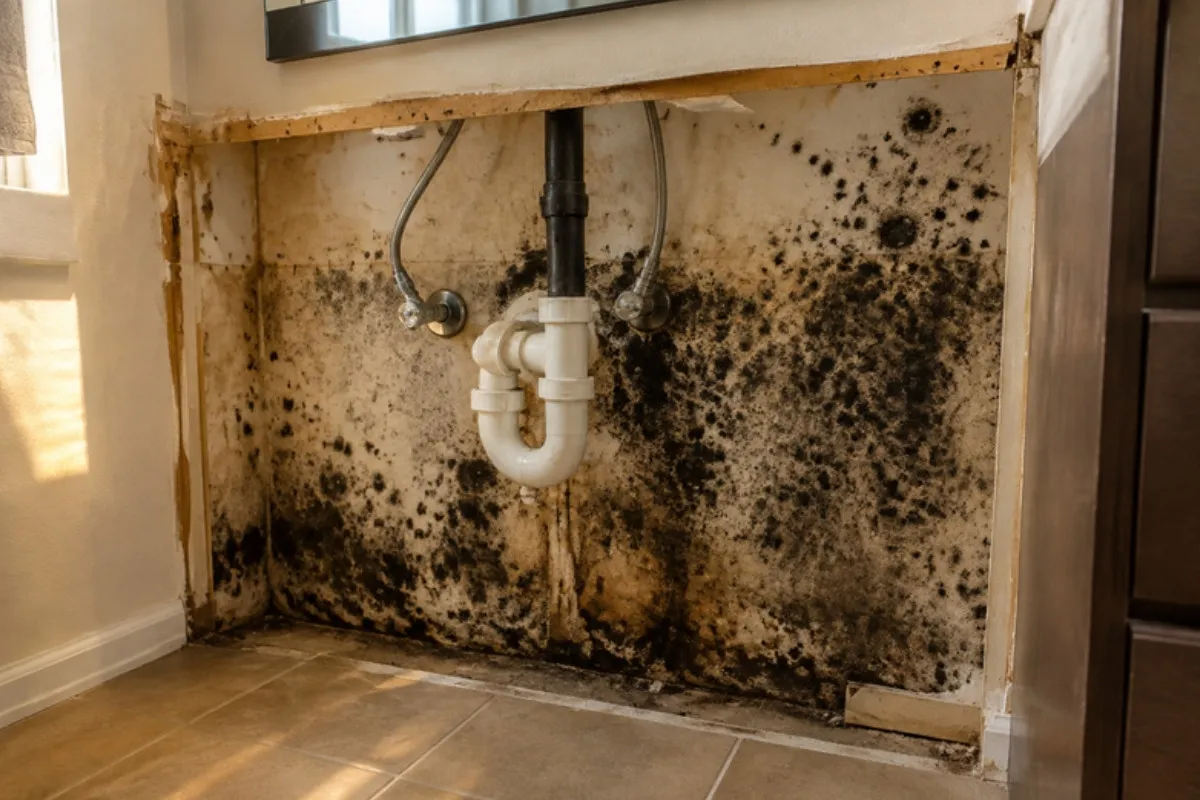
In this climate it tends to follow slow, hidden water: a leaking supply line behind a vanity, an AC drain line backing up into a closet, a daylight basement wall that wicks water from the red clay outside, or subfloor over a damp crawl space. Long, humid summers keep those spots wet, which is why the same stain keeps coming back after a wipe-down.
When it is a job for a company
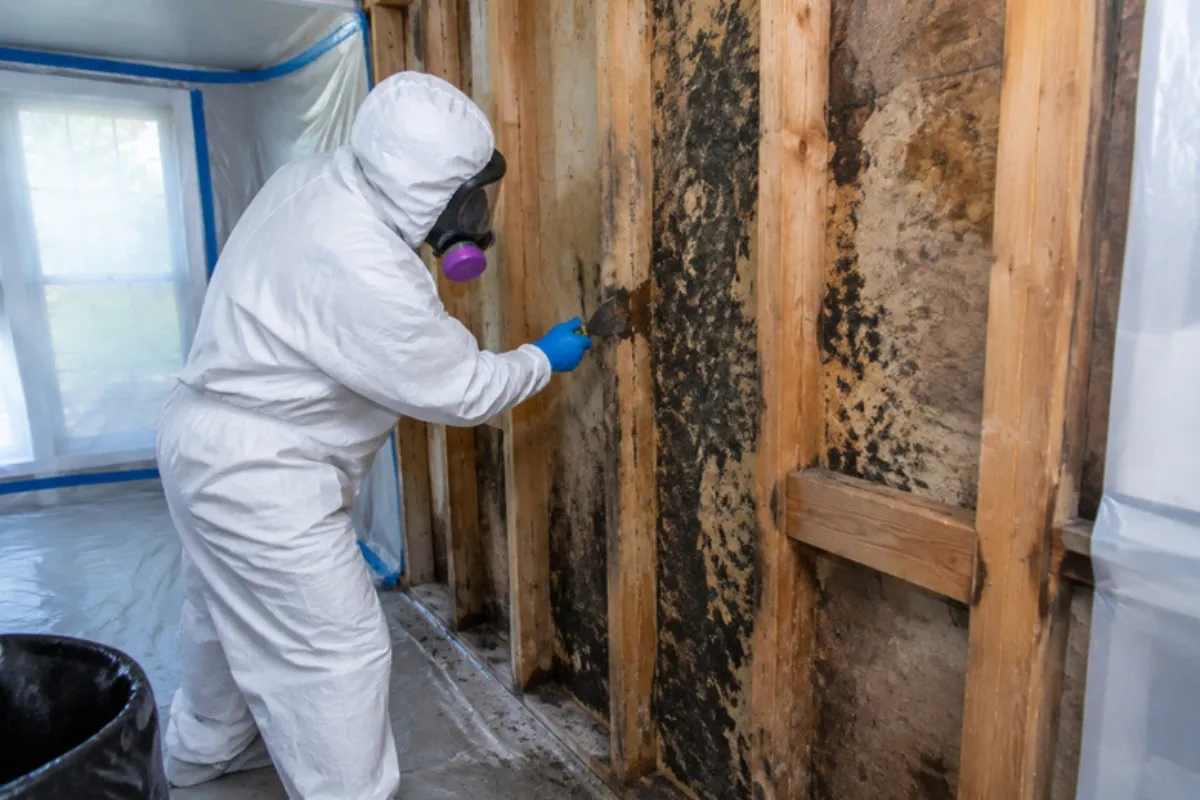
The EPA puts the do-it-yourself limit at roughly 10 square feet, about a 3 by 3 foot patch. Beyond that, or when the growth is inside a wall cavity or the HVAC system, a remediation company should set up containment and negative air before cutting anything out. Expect the crew to:
- Find and confirm the moisture source, and tell you who needs to repair it.
- Seal the work area and protect the rest of the house.
- Remove soaked drywall, insulation or carpet, then clean and dry framing.
- Leave the area open for a moisture check before rebuilding.
Cost and paperwork
Angi's Atlanta cost guide reports an average remediation bill of about $2,775, with most jobs between $1,249 and $4,363 and a common rate of $12 to $29 per square foot. Rebuild work adds to that. If the company will replace drywall or framing, ask whether it holds a Georgia residential or general contractor license and check it on the Secretary of State's GOALS Verify Now lookup. Georgia has no separate mold license. Many owners hire an independent inspector to confirm the work afterward, which Angi recommends.
Black Mold Removal questions from Atlanta homeowners
Is black mold more dangerous than other mold?
Should I test dark mold before having it removed?
Can I clean a small patch of black mold myself?
Does Georgia require a special license for mold removal?
Related mold services in Atlanta
Black Mold Removal in nearby cities and towns
Fulton County
DeKalb County
Cobb County
Gwinnett County
Clayton County
Henry County
Douglas County
Fayette County
Cherokee County
Forsyth County
Rockdale County
Paulding County
Coweta County
Walton County
Bartow County
Carroll County
Sources
Last updated: