Black mold removal in Alpharetta follows the same steps as any mold job: stop the water, seal off the area, cut out soaked porous material and clean what can be saved. Color does not tell you how risky the growth is, so size and moisture source decide the plan. Call the number on this page to be connected with a local mold remediation company in Alpharetta.
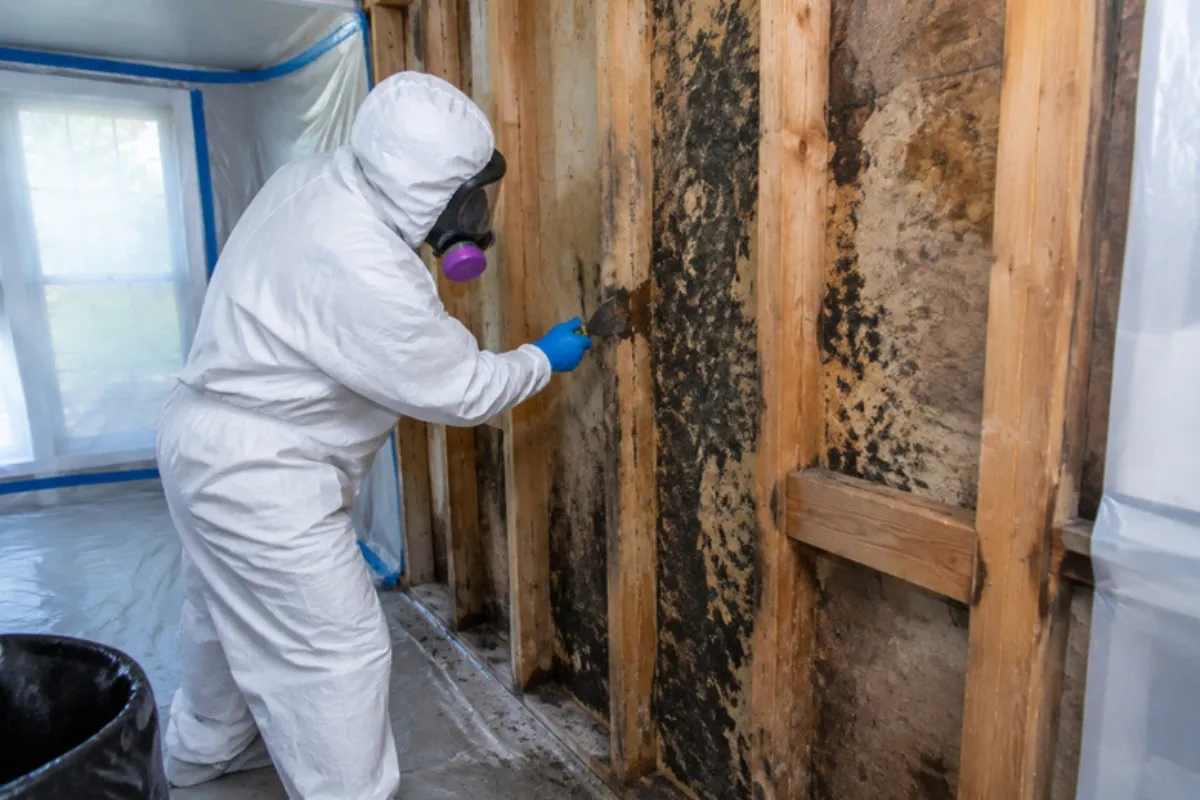
Where dark growth starts in Alpharetta houses
Alpharetta sits about 24 miles north of downtown Atlanta, and its farm-country past has given way to subdivisions, townhomes around Avalon and a rebuilt downtown. Newer construction does not rule out mold. Tight, well-sealed houses hold humidity in, and a slow drip from an ice maker line or a sweating attic air handler can stain drywall black before anyone notices. Low ground along Big Creek and the protected wetland between Haynes Bridge Road and Mansell Road stays damp after heavy rain, so finished basements near them deserve a close look along the bottom of exterior walls.
The color itself tells you little. Many molds look black or dark green, and EPA says color does not show how risky a mold is. What matters is size, material and the water feeding it.
Wipe it, cut it out, or call someone
| What you find | Sensible response |
|---|---|
| Dark speckling on shower caulk or tile grout | Scrub with detergent and water, dry it, run the bath fan longer |
| A patch under about 10 square feet on painted drywall | Often a homeowner job with gloves, goggles and an N-95 mask, once the leak is fixed |
| Black growth wider than 3 by 3 feet | A remediation company should contain and remove it |
| Staining that runs behind baseboards or cabinets | Assume it continues inside the wall and plan to open it |
| Mold on carpet pad or ceiling tile | Throw it out; porous material rarely comes clean |
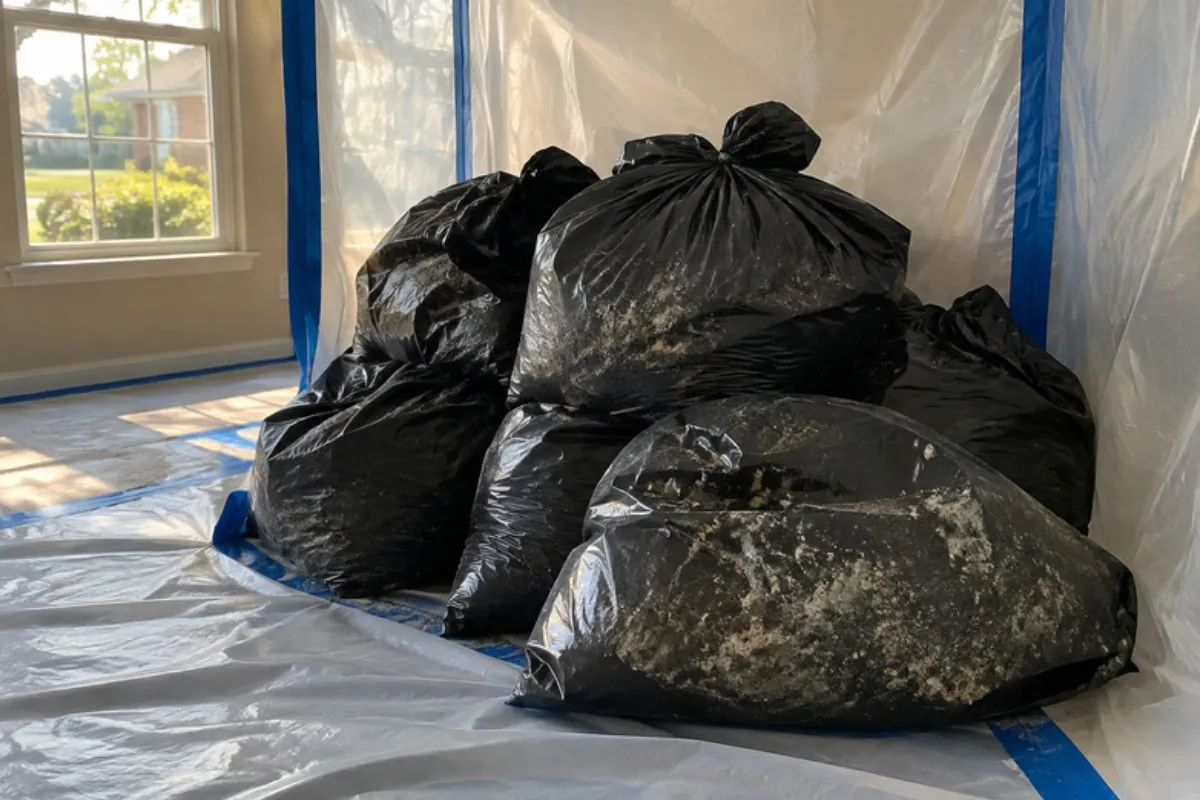
Signs it reaches past what you can see
- An earthy smell in the basement that returns a day after cleaning
- Black dots along the lower edge of drywall beside a sliding door
- Swollen baseboard or warped laminate by a dishwasher or refrigerator
- Dark rings on a ceiling under an upstairs bath or attic air handler
Seasonal timing
Most trouble in Alpharetta shows up in late spring and summer, when humid air reaches basements and condensate lines run all day. EPA advises keeping indoor humidity under 60 percent, ideally 30 to 50. After any leak, dry things within 24 to 48 hours. If tear-out leads to new drywall or framing, building permits go through the City of Alpharetta's Community Development department and its permitting portal. Renters with an unrepaired leak can contact Alpharetta Code Enforcement, which enforces maintenance of residential property. The Fulton County Board of Health says its complaint office does not respond to mold complaints.
Black Mold Removal questions in Alpharetta
How much black mold can I clean up on my own?
Do I need a permit to rebuild after black mold removal?
Will the county health department come look at black mold?
Why does black mold keep coming back in the same spot?
More mold services in Alpharetta
Black Mold Removal nearby
Helpful guides
Sources
Last updated: