Basement mold removal in Alpharetta starts with finding the moisture source, whether that is wet soil pressing on the foundation, a plumbing leak or summer condensation, and then removing moldy finish materials and cleaning what can be saved. Skip the moisture fix and the growth usually returns. Call the number on this page to be connected with a local mold remediation company in Alpharetta.
Where Alpharetta basement moisture comes from
Alpharetta sits about 24 miles north of downtown Atlanta, and much of the city drains toward Big Creek, the stream the Big Creek Greenway follows. A preserved wetland also lies between Haynes Bridge Road and Mansell Road. Lots near water like that often hold saturated soil for days after a heavy storm, and a below-grade wall surrounded by wet clay keeps passing moisture inward long after the rain stops. Gutters that overflow during a downpour and downspouts that empty right beside the house make that worse.
Across metro Atlanta, houses on sloped lots often have full or daylight basements, and plenty of them have been finished with carpet, drywall and a guest room or media space. Those finishes hide what the concrete is doing. By the time a smell or a stain shows up, the back of the drywall and the carpet pad have usually been damp for weeks.
Cleaning, removal or moisture work?
| Step | What it covers | When it applies |
|---|---|---|
| Surface cleaning | Scrubbing and drying concrete, block, studs and other hard surfaces | Growth on solid, non-porous material |
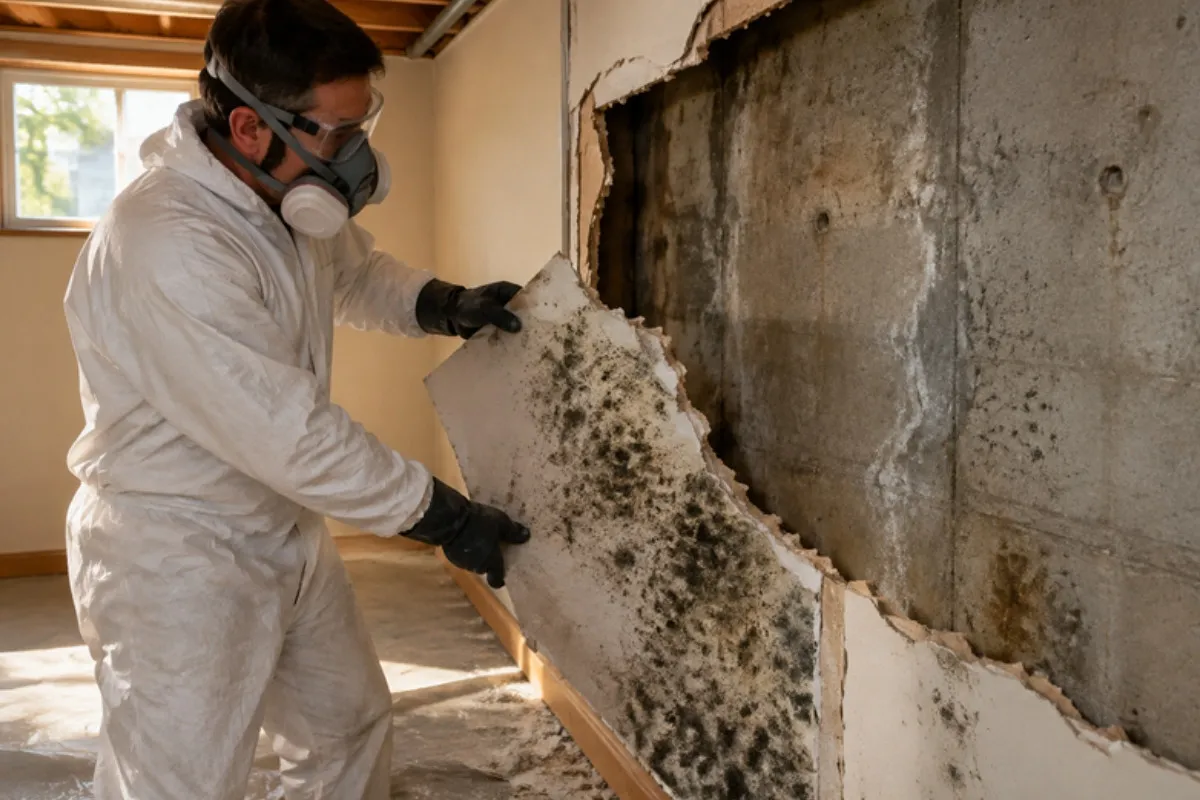
| Removal and replacement | Cutting out drywall, insulation, carpet and pad that hold mold | Porous finishes with growth or water damage |
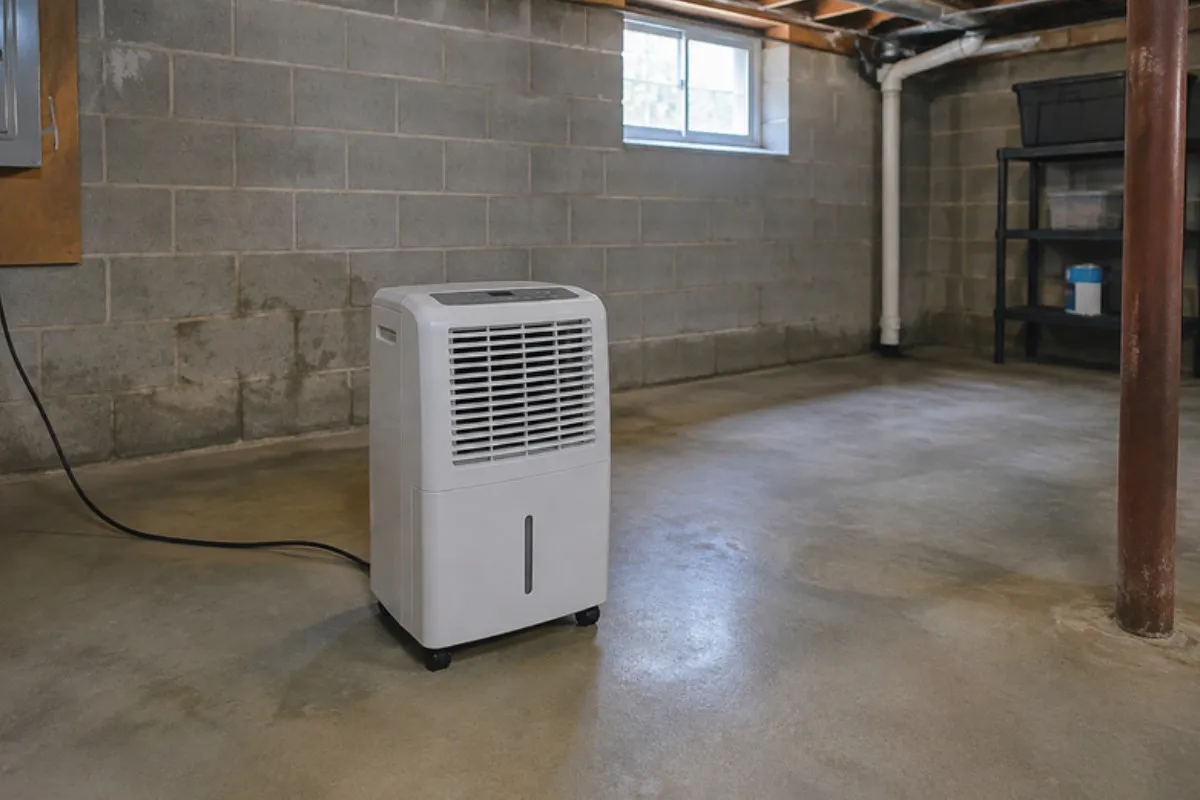
| Moisture correction | Gutters, grading, drainage, waterproofing, dehumidification, plumbing repair | Every job, or the mold comes back |
Most finished-basement jobs combine all three. EPA's guidance is that porous materials like carpet and ceiling tiles may need to be thrown out, and that mold should never simply be painted or caulked over.
Signs worth checking
- A musty smell that is strongest after the lower level has been closed up
- Baseboards that are swelling, stained or pulling away from the wall
- Paint bubbling low on an exterior wall
- Spotting on boxes or furniture pushed against the foundation
- Carpet that feels cool and damp along the outside wall
- Rust on the base of the water heater or the legs of a washer
If you smell mold but can't find it, the growth is often on the back of drywall or under the pad.
Timing in north Fulton
From late spring into early fall, humid air condenses on cool basement walls while thunderstorms soak the soil outside, so that is when most problems surface. The cooler, drier months are a good window to open walls and sort out drainage before the next summer. If removal turns into rebuilding, ask whether the work needs a permit from City of Alpharetta Community Development, which takes applications through the city's permitting portal.
Basement Mold Removal questions in Alpharetta
Will a dehumidifier keep my basement from growing mold?
Is white powder on my basement wall mold?
Should the company that tests my basement also remove the mold?
Will the county health department look at mold in my basement?
More mold services in Alpharetta
Basement Mold Removal nearby
Sources
Last updated: